

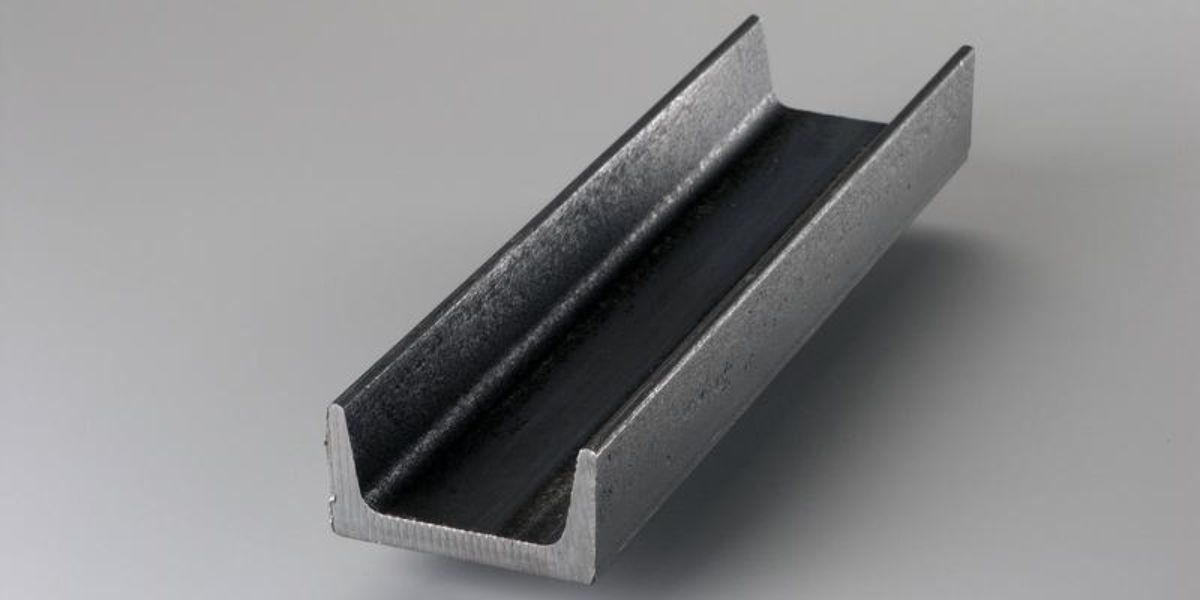
When it comes to metal channels relied upon in construction and fabrication, C channels and U Channels remain to be the most popular options available today. Even though these terms are sometimes used interchangeably in casual conversations, they actually refer to two different types of metal channels with dissimilar shapes, manufacturing methods, and applications.
In this regard, you should take the initiative to unravel the existing differences between these two if you’re to choose the perfect one for your project requirements. And that’s what this simple guide will help ensure you understand today. Let’s find out more below:
What is a C Channel?
A C channel, also known as UPN or structural channel is a metal profile with a cross-sectional shape resembling the letter ‘C.’ It features a flat back with two flanges that extend outward, but the main feature is that the flanges are tapered. What this simply means is that the flanges are slightly angled or sloped rather than perfectly parallel.
C Channels are manufactured through hot rolling, which creates strong, durable profiles designed for structural applications. Going with their strength and standardization, C channels are widely leveraged in construction, heavy equipment frames, and industrial projects.
What is a U Channel?
A U Channel, on the other hand, has a cross-sectional shape that resembles the letter ‘U.’ Unlike the C channel, the flanges of a U Channel are parallel to each other, meaning, they don’t taper or slope. This gives the U Channel a more uniform appearance and makes it easier to align with other flat surfaces.
When it comes to the production methods of U Channels, cold forming methods such as extrusion or bending sheet metal are widely used. This manufacturing expedition allows for more accurate dimensions and cleaner edges but typically results in a product that is lighter and less suited for heavy structural applications compared to hot-rolled C channels.
With the decision of choosing between a C Channel and a U Channel, there are a couple of things you need to factor in. If your project entails supporting heavy loads, structural reinforcement, or carrying significant weight, a C channel is the better option. Its tapered flanges and hot-rolled construction makes it way more superior in strength and durability.
Things tend to be different when the channel is mainly for aesthetic purposes, light-duty framing, or as a trim component since a U Channel can serve you better in this regard.


